Your knees complain when you get up from the sofa. Your hands feel stiff around the kettle in the morning. Reaching behind your back has become uncomfortable, even though you cannot remember hurting your shoulder.
When these changes arrive alongside disrupted sleep or unpredictable periods, it is reasonable to wonder whether menopause is involved. Muscle aches and joint pains are recognised symptoms of perimenopause and menopause. But the timing alone cannot tell you what is causing the pain.
The useful next step is to take the discomfort seriously, keep movement manageable and seek assessment when symptoms persist or change. This guide explains the possible connection and the support available. It does not diagnose joint conditions or replace an individual assessment.
The possible connection between menopause and joint pain
Oestrogen affects more than the reproductive system. Research suggests that sex hormones influence joint tissues and how pain is experienced. Fluctuating and declining hormone levels may therefore contribute to aches during the menopause transition. The relationship is complex, and researchers are still working out how much is hormonal and how much reflects ageing or other factors.
Sleep disruption can make living with pain harder, while painful joints can make a comfortable night’s sleep difficult. Changes in activity and existing health conditions may also affect how you feel. A conversation about joint pain should make room for this wider picture without dismissing the pain as “just stress”.
There is no single pattern of knee, hand or shoulder pain that establishes a menopause-related cause. Having hot flushes at the same time does not rule out a separate joint or tendon problem.
Why this matters for women in Malaysia and Singapore
In a Malaysian study published in 2025, researchers analysed 1,825 eligible responses from working women aged 40–60. Joint pain was the most commonly reported symptom, at 34.6%. This was a finding in the surveyed group, not an estimate that every Malaysian woman has the same risk.
A Singapore study published in 2024 examined women aged 45–69 attending National University Hospital well-woman clinics. About one-third reported joint and muscular symptoms meeting the study’s threshold for arthralgia, or joint pain. Lower muscle strength was also associated with these symptoms.
These studies show that musculoskeletal concerns deserve attention in local menopause care. They do not prove that hormones caused the pain, or that weaker muscles were the cause rather than a consequence of discomfort.
Why not every ache should be attributed to menopause
Joint pain may arise from an injury, repetitive strain or a condition such as osteoarthritis or inflammatory arthritis. Pain felt around a joint can also involve surrounding tissues. More than one factor may be present.
You do not need to work out which explanation fits before asking for help. Tell a clinician what has changed and what you can no longer do comfortably. Avoid using an online symptom checklist to label the problem.
Bone health is a related but different issue. Osteoporosis usually causes no symptoms until a fracture occurs; aching knees or hands are not a reliable way to judge bone density. Whether bone-health assessment is appropriate depends on your individual risk factors.
Symptoms that need medical attention
Seek urgent medical attention for a hot, swollen joint, or joint pain accompanied by fever, shivering or feeling generally unwell. Seek emergency care for severe joint pain after an injury, a joint that looks out of place, or inability to walk or bear weight.
Arrange a medical appointment if pain affects sleep or ordinary activities, keeps returning, worsens, or has not improved after about two weeks of self-care. Morning stiffness lasting more than 30 minutes also deserves assessment. These are reasons to seek help, not criteria for diagnosing yourself. You can ask for advice earlier if you are concerned.
What can help with stiffness and everyday movement
Start with activity you can repeat comfortably
When movement hurts, it is understandable to become cautious. Rather than trying to make up for lost activity on a good day, aim for manageable amounts spread through the week. A short walk on level ground, gentle cycling or pool-based activity may feel more achievable than a long workout. The right choice depends on the joint involved and your health.
In Malaysia and Singapore, a shaded route early in the day or an indoor walking space may make regular activity easier to fit around the heat. Brief movement breaks during desk work can also provide a practical starting point.
Avoid forcing a painful joint through a stretch or pushing through sharp or escalating pain. If a particular activity repeatedly makes symptoms worse, seek advice on adapting it. New swelling or urgent symptoms should be assessed before continuing an exercise plan.
Build strength gradually
Strength work helps muscles manage the demands of daily life, from rising from a chair to carrying shopping. It can use body weight, resistance bands or weights; it does not have to begin with a gym membership.
Singapore’s general physical activity guidance includes muscle-strengthening activity on at least two days a week. Think of this as a longer-term health goal, not a starting prescription for a painful joint. A physiotherapist can help choose suitable movements and a manageable starting level.
For people with osteoarthritis, NICE recommends tailored therapeutic exercise, including muscle strengthening and aerobic activity. That evidence supports exercise for an established joint condition; it should not be presented as proof that one exercise routine treats all menopause-related aches.
Use physiotherapy to make the plan personal
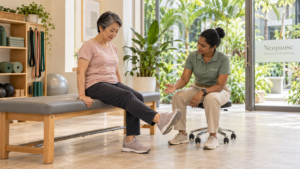
A physiotherapist can assess movement, strength and the activities that provoke symptoms, then build a programme around what matters to you. That might mean climbing stairs more comfortably, returning to Pilates or reaching a shelf without pain.
Ask how to pace the exercises, what discomfort is acceptable and when the plan should be reviewed. For hip or knee osteoarthritis, NICE advises that hands-on treatment, if used, should accompany exercise rather than replace it.
“Keep active” is easier to follow when someone has helped you work out what that means for your body.
Include sleep and daily workload in the conversation
If night sweats or pain are repeatedly waking you, mention this as part of the same appointment. Plan demanding tasks in smaller stages and allow recovery time rather than alternating between doing everything and being unable to do much the next day. These adjustments can support pain management without implying that the symptoms are your fault.
Can HRT help with menopause joint pain
Some evidence suggests a benefit, but it is important to keep expectations realistic. A secondary analysis of the Women’s Health Initiative trial found a modest reduction in reported joint pain with oral oestrogen alone compared with placebo. The participants were postmenopausal women who had undergone hysterectomy, and joint symptoms were not the trial’s primary outcome.
This does not establish that every HRT formulation will relieve joint pain, or that the same benefit applies during perimenopause. HRT should be discussed in the context of your overall menopause symptoms, medical history, preferences and individual benefits and risks. It is not a substitute for assessing a swollen, injured or persistently painful joint.
What about pain relief and supplements
A pharmacist or clinician can advise on suitable pain relief, taking account of your other medicines and health conditions. Some anti-inflammatory medicines can cause stomach, kidney or cardiovascular problems, so an over-the-counter product is not automatically suitable for everyone.
Be cautious with products marketed as a universal answer to menopause joint pain. For example, NICE does not recommend glucosamine for osteoarthritis because strong evidence of benefit is lacking. A product’s popularity is not the same as evidence that it will help your particular symptoms.
A few notes can make your appointment more useful
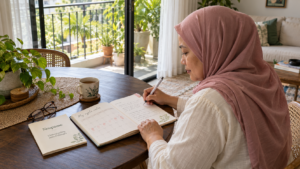
You do not need a detailed tracker. A brief record of the following can help explain what you have noticed:
- Where the pain is and when it started, including any injury or change in activity.
- How long stiffness lasts after waking or sitting, and whether you have noticed swelling.
- Which movements are difficult, such as opening jars, using stairs or reaching overhead.
- The effect on sleep, work, exercise and confidence in moving.
- Other symptoms, menstrual changes and your medicines, HRT or supplements.
Useful questions include: “What else should we consider?”, “Would physiotherapy help me move more comfortably?” and “When should we review this if it is not improving?” The goal is a plan you understand and can realistically follow.
Frequently asked questions
Can joint aches begin before periods stop?
Yes. Muscle aches and joint pains are recognised during perimenopause as well as after menopause. That does not establish the cause of an individual ache.
Should I stop exercising if my joints hurt?
The appropriate activity depends on the problem. A tailored plan may help you stay active while adjusting movements that aggravate symptoms. Sudden severe pain, a hot swollen joint or inability to bear weight needs assessment rather than an exercise experiment.
Will the pain disappear after menopause?
There is no reliable timetable that applies to everyone. Because joint pain has several possible causes, persistent symptoms deserve attention rather than waiting for the transition to end.
Finding a clearer way forward
When familiar movements start to feel difficult, it can unsettle your confidence as much as your routine. You deserve to have the change heard and to understand the options for support.
If you would like to reflect on other changes you have noticed alongside joint aches, Neopause’s complimentary quiz offers a gentle starting point for thinking about your symptoms and the questions you may want to discuss with a healthcare professional. It is an educational tool, not a diagnosis, and should not delay assessment of persistent or concerning pain.
This article provides general health education and does not replace personalised advice from a qualified healthcare professional.